
Total knee replacement
Understanding Total Knee Replacement: What You Need to Know
A revision total knee replacement (TKR) is a surgical procedure performed to replace a previously implanted knee prosthesis that may have failed, become loose, or is causing pain. This procedure is considered for patients who have had a knee replacement but are now experiencing problems with the original implant.

What is a Total Knee Replacement?
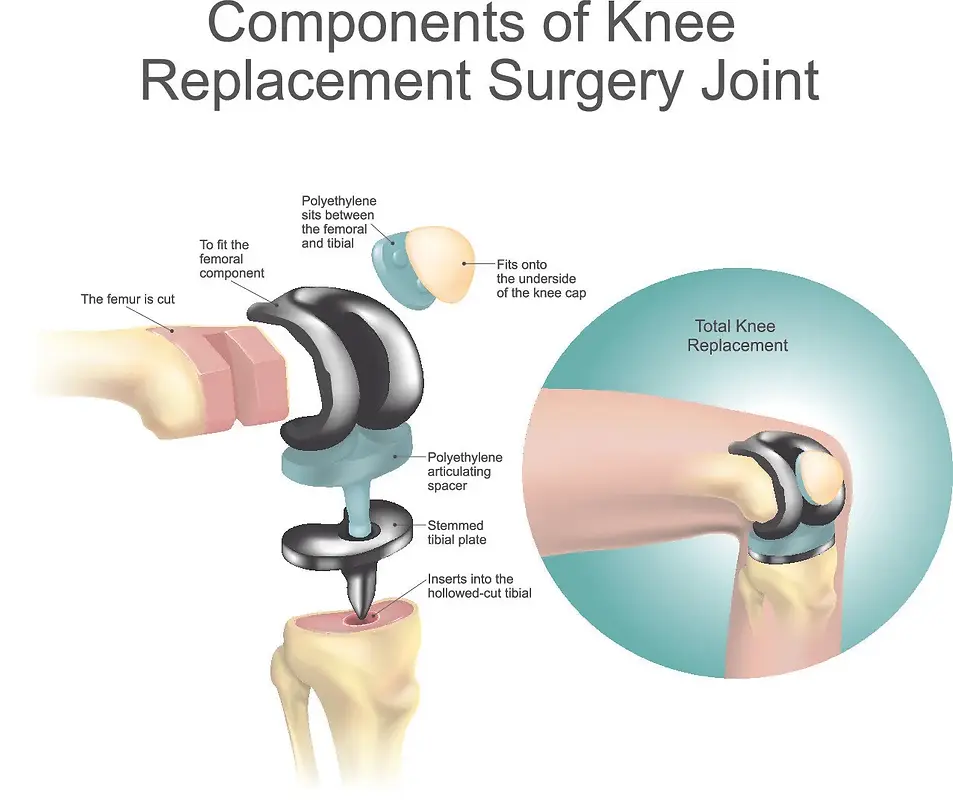
A total knee replacement (TKR), or knee arthroplasty, is a surgical procedure that involves replacing the damaged or worn-out knee joint with an artificial one. The knee joint consists of the femur (thigh bone), tibia (shin bone), and the patella (kneecap). During TKR, the damaged cartilage and bone are removed and replaced with smooth, durable components made of metal and plastic. This procedure is typically recommended for patients with severe knee arthritis, rheumatoid arthritis, or traumatic injury.
What Are the Goals of Total Knee Replacement Surgery?
The primary goal of total knee replacement is to relieve pain and improve mobility. For most patients, the procedure effectively eliminates arthritis pain, enabling them to return to daily activities. While the artificial knee performs well, it may not feel exactly like a natural knee. Most patients report being aware of the artificial joint but find that the improvement in mobility and pain relief significantly outweighs this minor adjustment.
What Patients Are Considered for Total Knee Replacement?
Patients who are considered for TKR generally experience chronic knee pain, swelling, stiffness, and decreased mobility that do not respond to conservative treatments like medications, physical therapy, or lifestyle changes. If knee pain severely affects the ability to perform everyday tasks, knee replacement may be the best option.


What Happens During the Procedure?
During a total knee replacement, the surgeon removes the damaged cartilage and bone surfaces from the knee joint and replaces them with metal and plastic components. The ends of the femur and tibia are resurfaced, and if necessary, the underside of the patella is also replaced. This procedure helps restore the natural movement of a healthy knee.
How Long Does the
Surgery Take?
The surgery typically lasts between one to two hours, followed by a hospital stay of several days. Postoperative care includes pain management, physical therapy, and a gradual return to normal activities. Most patients can resume daily activities within six weeks, though complete recoveree function may take up to a year.
How Long Does It Take to Recover from Knee Replacement Surgery?
Recovery from knee replacement surgery is a gradual process. Hospital stays generally last 24 to 72 hours, and we aim to get patients up and walking within hours of the procedure. Many patients can go home the day after surgery, or sometimes the same day, if recovery is progressing well. Crutches are typically used for the first few weeks, and most patients stop using them around the house within a week or two, though they may continue using them outdoors for a bit longer.
The first few weeks post-surgery can be challenging, with pain and swelling being most pronounced. Pain management is crucial during this period, and ice therapy is recommended to reduce discomfort. By six weeks, most patients begin feeling significantly better, and by three months, many experience noticeable improvement. Full recovery, including restored strength and flexibility, can take up to 12 months.

What Are the Risks of Total Knee Replacement Surgery?
Like any surgery, total knee replacement carries some risks. The risks specific to knee replacement surgery include:
-
Infection:
While rare (about 1 in 200 cases), infection around the replaced knee can occur, sometimes requiring further surgery. -
Stiffness:
Stiffness is a potential risk, making physiotherapy vital for improving mobility and preventing scar tissue formation. -
Blood clots:
Blood clots are a concern, but blood thinners are provided to minimize the risk. -
Nerve, blood vessel, tendon, or ligament damage:
Though rare, surrounding structures of the knee may be inadvertently damaged. -
Ongoing discomfort:
While most patients experience long-term pain relief, some may notice occasional discomfort or minor issues, such as a clunking sound. While it may not feel exactly like a natural knee, the benefits of pain relief and improved function generally outweigh these minor drawbacks.
.jpg)
Long-Term Outlook
For patients with severe knee arthritis, a total knee replacement can dramatically improve quality of life by reducing pain, increasing mobility, and allowing for a return to normal activities. Although the artificial knee joint can wear out over time, most patients experience excellent function and pain relief for many years. With proper care and rehabilitation, approximately 90% of knee replacements continue to function well for up to 20 years.

Conclusion
While knee replacement surgery is a major decision, the benefits often far outweigh the risks for individuals suffering from severe knee pain and limited mobility. If you’re considering this surgery, it’s important to consult with an orthopaedic surgeon to determine if TKR is the right option for you based on your specific condition.
For more information or to discuss whether a total knee replacement might be right for you, please contact our clinic to schedule a consultation.